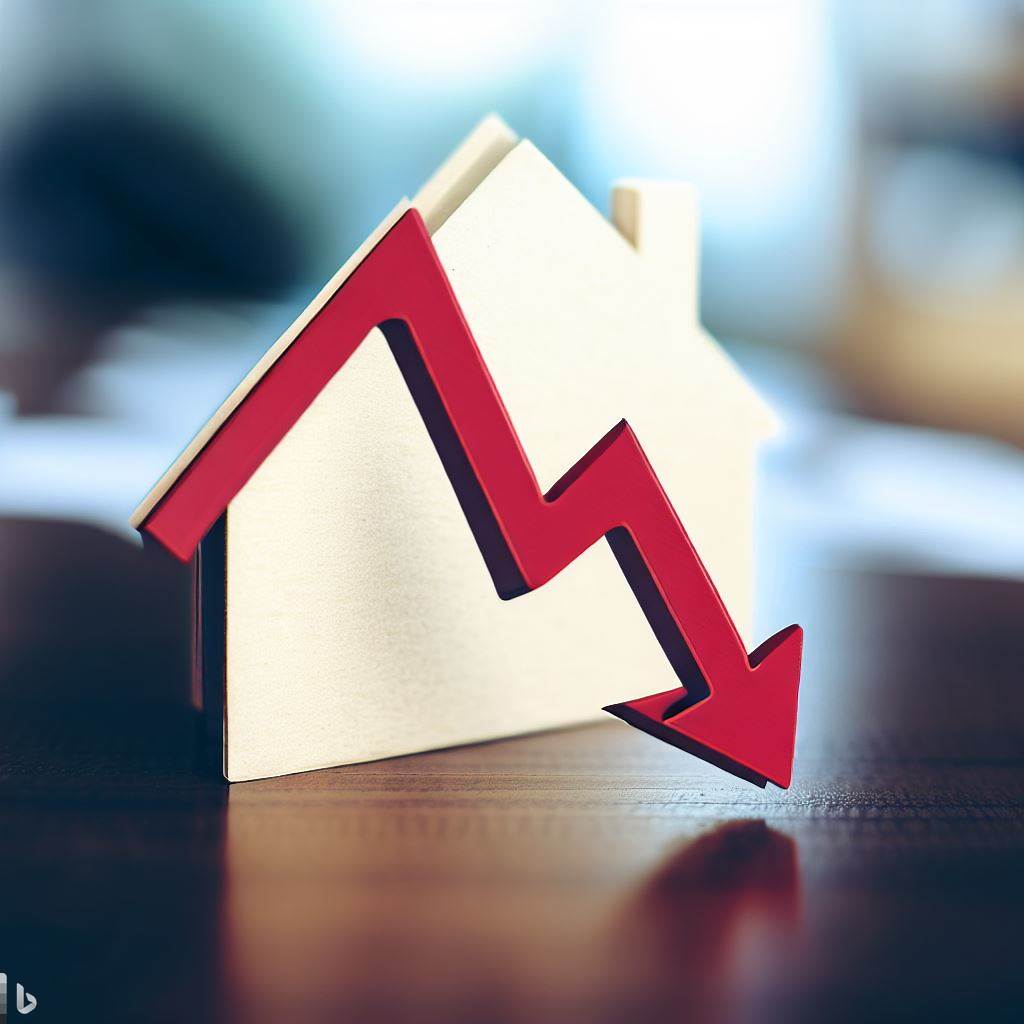
Pending Home Sales Decreased 5.2% In March
The housing market experienced a 5.2% decline in pending home sales in March. Discover the factors driving this decline, expert perspectives, and strategies for buyers and sellers. Find out what the future holds for pending home sales in coming months.
Introduction
By reflecting the buying and selling activity of residential properties, the housing market serves as a barometer for the overall economy. A pending home sale provides a valuable insight into future home sales since it represents properties under contract but not yet closed. Understanding the dynamics of pending home sales can provide us with valuable insights into the broader real estate market and allow us to make informed decisions regarding our investments. The purpose of this article is to explore the recent decline in pending home sales, shed light on the underlying causes, and discuss the implications for buyers and sellers.
Understanding Pending Home Sales
It is important to establish a clear understanding of pending home sales before we attempt to address the specifics of the recent decline. An offer to purchase a home may be submitted by an interested buyer when it is listed for sale. Once the offer has been accepted by the seller, the property enters a pending status.
The buyer conducts inspections, secures financing, and completes necessary paperwork during this period. Once all of these conditions have been met, the sale is considered pending and will eventually close.
Providing valuable information on market trends and buyer activity, real estate associations track and report pending home sales. Experts can analyze pending home sales to gain insights into the overall strength of the housing market, gauge buyer sentiment, and predict future home sales by analyzing pending home sales. As some contracts may fall through due to financing issues, inspection problems, or other unforeseen circumstances, pending home sales do not necessarily translate directly into completed sales.
Factors Affecting Pending Home Sales
There are several factors that contribute to the level of pending home sales in a given month. In order to comprehend the dynamics behind the recent decline in pending home sales, it is crucial to comprehend these factors which can fluctuate based on market conditions, economic indicators, and consumer behavior. Here are some key factors that influence this metric.
1. Mortgage Rates
Home affordability and buyer demand are heavily influenced by mortgage rates. When interest rates are low, borrowing costs decrease, making homeownership more affordable for a wider range of potential buyers. Conversely, when interest rates rise, borrowing becomes more expensive, resulting in reduced affordability and potentially dampening buyer interest. Due to the sensitivity of buyers to changes in monthly mortgage payments, fluctuations in mortgage rates can directly affect pending home sales.
2. Inventory Levels
Availability of housing inventory also influences pending home sales. In a seller's market, where demand outweighs supply, inventory levels tend to be low. As a result of this scarcity, several offers may be made and bidding wars may occur, resulting in a higher number of pending sales. Conversely, in a buyer's market, where supply exceeds demand, inventory levels tend to be higher, giving buyers greater options and negotiation power. The number of pending home sales may decrease when inventory is abundant because buyers have more choices and are able to make more informed choices.
3. Economic Conditions
The overall state of the economy plays a crucial role in the housing market's performance. Buyer sentiment and willingness to make long-term financial commitments are heavily influenced by economic indicators such as GDP growth, employment rates, and consumer confidence. As buyers become more cautious and delay their purchasing decisions during times of economic uncertainty or recession, pending home sales may decline. However, during times of economic prosperity, pending home sales typically increase as buyers feel more confident about their financial situation.
4. Buyer Sentiment
An important factor affecting pending home sales is buyer sentiment, which is influenced by a variety of factors, such as employment security, personal finances, and market conditions. In order to engage in homebuying activities, buyers must feel optimistic about the future and have a positive perception of the housing market. In contrast, when uncertainty prevails or negative perceptions dominate, buyers may delay making offers, resulting in a decrease in pending sales.
The Impact of the COVID-19 Pandemic
The COVID-19 pandemic has had a profound impact on various aspects of our lives, including the housing market. As countries implemented lockdowns, travel restrictions, and social distancing measures, the real estate industry had to adapt to a new normal. The pandemic's effects on pending home sales are multifaceted and have contributed to the recent decline witnessed in March.

-
Due to the increased time spent at home, consumers' priorities and preferences regarding housing changed as a result of the pandemic. A growing demand for single-family homes and suburban properties was fueled by an increase in demand for space, home offices, and outdoor areas. As a result of this shift in demand, coupled with limited inventory in certain areas, increased competition resulted and pending home sales could be delayed.
-
During the pandemic, some potential buyers may have put their plans on hold due to health concerns and economic uncertainty. Increasing uncertainty in the housing market, financial constraints, and job instability prompted buyers to take a more cautious approach, opting to wait and observe before committing to a purchase. As a consequence of these factors, as well as restrictions on in-person showings and inspections, pending home sales declined in March.
March's Pending Home Sales Report
In March, the release of the pending home sales report sent ripples throughout the real estate industry, signaling a 5.2% decrease in this important metric. Let's examine the key statistics and investigate the factors contributing to this significant decline to raise eyebrows and spark discussions among industry professionals and market observers.
In the March report, pending home sales were reported to have fallen by 5.2% compared to the previous month. While many analysts expected a more moderate decrease or even a potential increase in pending sales, this decline was unexpected. It is important to consider regional variations when analyzing this data. Some areas experienced significant decreases in pending home sales, while others experienced stability or even positive figures.
This decline is attributed to a number of factors, including rising mortgage rates, limited inventory, and lingering effects of the COVID-19 pandemic. Let's explore these factors in more detail and gain insights into their effects on pending home sales.
1. Rising Mortgage Rates
A major factor contributing to the decline in pending home sales was the rise in interest rates, which impacted the affordability of homes for many buyers in recent months. A higher borrowing cost results in a higher monthly mortgage payment, which could push some buyers out of the market or force them to rethink their price range. As a result of the rise in mortgage rates, buyer demand was dampened and pending home sales declined.
2. Limited Inventory
As a result of the persistent issue of a limited housing inventory, pending home sales have declined. Many markets have experienced a shortage of available properties, particularly in desirable areas and metropolitan areas. In the absence of sufficient inventory, buyers have fewer options and face increased competition, resulting in the possibility of bidding wars and higher prices. Several potential buyers may have been deterred from entering the market as a result of a lack of inventory and rising prices.
3. Lingering Impact of the COVID-19 Pandemic
Despite vaccination efforts being underway, the COVID-19 pandemic continues to exert its influence on the housing market, despite vaccination efforts being conducted. There is a climate of caution and hesitation among buyers due to a variety of restrictions on various activities, ongoing health concerns, and economic uncertainty.
However, the recent decline in pending home sales suggests that it may slow down in the near future, despite initially rebounding strongly following the initial shock caused by the pandemic. Prior to making significant financial commitments, buyers may be taking a wait-and-see approach, anticipating stability and clarity.
FAQ’s
1. What is the definition of pending home sales?
Pending home sales are those in which a contract has been signed, but has not yet been closed. They represent the number of houses that have been sold but are still awaiting inspections, appraisals, and financing.
2. How are pending home sales different from existing home sales?
An existing home sale refers to a closed transaction in which ownership has transferred from the seller to the purchaser. Pending home sales represent properties that have not yet closed. Existing home sales refer to completed sales in which the property has closed and ownership has been transferred from the seller to the purchaser.
3. What factors can influence pending home sales?
The number of pending home sales may be influenced by a variety of factors, such as mortgage rates, inventory levels, economic conditions, and buyer sentiment. These factors collectively influence the demand and supply dynamics in the housing market.
4. How do rising mortgage rates affect pending home sales?
Homebuyers may experience reduced affordability as mortgage rates rise. As mortgage payments increase, some potential buyers may decide to delay their purchase plans or adjust their price range as a result of increasing mortgage payments. In turn, this can result in a decrease in pending home sales.
5. Is the decline in pending home sales a cause for concern?
Despite the fact that a decline in pending home sales indicates a slowdown in some markets, it does not necessarily signify a long-term negative trend. It is important to evaluate the decline in pending home sales in the context of regional variations and underlying factors. It is important to monitor market conditions and seek expert advice to better understand the implications for buyers, sellers, and the housing market as a whole.
Pending Home Sales Decreased 5.2% In March
Pending Home Sales Decreased 5.2% in March Pending home sales decreased in March for the first time since November 2022, according to the National Association of REALTORS®. The Pending Home Sales Index (PHSI) waned by 5.2% to 78.9 in March. Year over year, pending transactions dropped by 23.2%. "The lack of housing inventory is a major constraint to rising sales," said NAR Chief Economist Lawrence Yun. Compared to last year, NAR forecasts that median existing-home prices will mostly stabilize – with the national median existing-home price decreasing by 1.8% in 2023 The index is based on a sample that covers about 40% of multiple listing service data each month.
Conclusion
The 5.2% decrease in pending home sales during March has raised questions and sparked discussions within the real estate industry. This decline is attributed primarily to rising mortgage rates, limited inventory, and the lingering effects of the COVID-19 pandemic. When analyzing pending home sales data, regional variations must be considered, as each area experiences a different dynamic.