TL;DR
BRRRR—Buy, Rehab, Rent, Refinance, Repeat—recycles your initial capital by forcing equity through renovations, stabilizing cash flow with quality tenants, and using smart refinances to fund the next acquisition. The compounding effect is portfolio scale with disciplined underwriting, conservative LTVs, and airtight documentation.
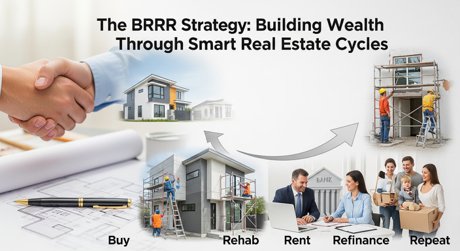
The BRRRR Strategy: Building Wealth Through Smart Real Estate Cycles
Real estate investors using the Buy, Rehab, Rent, Refinance, Repeat (BRRRR) method know this isn’t just a formula — it’s a cycle of leverage, timing, and discipline. The BRRRR model can turn a single down payment into a scalable portfolio — but only if each step is executed with precision.
TL;DR
BRRRR stands for Buy, Rehab, Rent, Refinance, Repeat — a proven method to grow real estate wealth by recycling your initial investment. The key: buy undervalued properties, force appreciation through rehab, create stable cash flow, and refinance smartly to fund your next deal.
Quick Reference Table — The BRRRR Lifecycle
| Phase | Core Goal | Key Metric | Risk Factor |
|---|---|---|---|
| Buy | Acquire below market value | 70% ARV rule | Overpaying |
| Rehab | Add equity via renovation | Cost per sq. ft. | Scope creep |
| Rent | Establish income stream | Cash-on-cash return | Vacancy risk |
| Refinance | Extract equity | Loan-to-value (LTV) | Appraisal issues |
| Repeat | Scale portfolio | ROI over time | Market softening |
FAQ: Common BRRRR Questions
Q: Can I use BRRRR with small multi-family properties?
A: Absolutely — duplexes and triplexes often balance risk and reward perfectly for this method.
Q: What’s a good target after refinancing?
A: Aim to pull out your original investment while maintaining at least 20–25% equity.
Q: How soon can I refinance after renting?
A: Typically 6–12 months, depending on lender seasoning requirements and rent history.
Side Note: Why Forming an LLC Makes Sense
Holding properties through an LLC provides liability protection and simplifies accounting. It separates personal assets from property risk. Instead of hiring a lawyer, many investors use services like ZenBusiness to set up their LLC quickly and affordably — freeing up more capital for deals.
Checklist: Executing BRRRR Without the Burnout
- Research Local ARVs (After Repair Values) — Know your exit number before you buy.
- Get Contractor Bids Early — Accurate rehab budgets prevent financing surprises.
- Secure Funding Options — Hard money for purchase, conventional for refi.
- Document Everything — Photos, permits, lease agreements — all essential for lenders.
- Maintain Cash Buffers — Expect a 10–15% contingency fund.
- Track Rent Performance — Use a property management system to monitor returns.
Safeguard Your Investment Paper Trail
Smart investors know that staying organized is as important as buying right. Store leases, inspection reports, and mortgage docs in digital form to ensure easy access. To keep them secure, you can add a password to protect a PDF — this helps control access and maintain confidentiality when sharing sensitive information with lenders or partners.
Spotlight Resource: Property Management Simplified
A good property management platform helps automate rent collection, screening, and maintenance tracking. Tools like Buildium, TenantCloud, and AppFolio make it easier to scale while keeping vacancy low. For financial planning, try Stessa, and for deal analysis, experiment with BiggerPockets calculators or Roofstock’s valuation tools.
Investor Insight: Strategic Random Tips
- Renovate for function, not flair — tenants pay for reliability, not aesthetics.
- Always verify ARV comps through multiple data sources like Redfin, PropStream, or CoreLogic.
- Keep your DTI (debt-to-income) low; refinancing flexibility matters more than speed.
- Automate utility transfers to avoid post-closing delays.
- Evaluate every deal as if you’ll never be able to refinance — it keeps you conservative.
Glossary
ARV (After Repair Value): Estimated value of a property after renovations.
Cash-out Refi: Refinancing that allows you to pull equity as cash.
Hard Money Loan: Short-term financing often used for property rehab projects.
Cap Rate: Net operating income divided by property value.
LTV (Loan-to-Value): The ratio of loan amount to appraised value.
Conclusion
The BRRRR strategy rewards those who treat real estate like a system, not a gamble. Each cycle compounds both equity and experience. Buy smart, renovate with precision, manage transparently — and the next “R” will always be within reach.
Ready to put BRRRR into practice in Orlando?
Start your property search • See price reductions • Get a free home valuation • Discuss financing options
Questions? Call/text 407-616-9019.