


Understanding Disaster Fraud in Florida: What You Need to Know
Disaster fraud is a significant concern in Florida, a state that frequently experiences hurricanes, tropical storms, and other natural disasters. Scammers exploit these crises, preying on vulnerable residents during the chaos that follows. Understanding how these frauds occur and learning how to protect yourself can help minimize the financial and emotional toll on Floridians recovering from catastrophic events.
The Rise of Disaster Fraud in Florida: Why It's a Growing Problem
The frequency of disaster fraud in Florida has increased as the state continues to face severe weather events nearly every year. From hurricanes and flooding to storm surge damages, the aftermath of these natural disasters creates the perfect environment for opportunistic criminals. Scammers capitalize on the sense of urgency and desperation felt by homeowners, businesses, and charitable organizations, exacerbating the struggles of recovery. Florida’s vast coastline and dense population make it a prime target for these activities, highlighting the need for awareness and robust prevention measures.
Common Types of Disaster Fraud Scams in Florida
Contractor Scams: Overcharging and Fake Repairs
After hurricanes and storms, unlicensed contractors often flock to the state, offering repair services. Many collect deposits without performing the work or use low-quality materials. In some cases, they perform unnecessary repairs just to inflate costs. With Florida’s rapid growth and ongoing construction, contractor fraud is especially prevalent.
Insurance Fraud: False Claims and Adjuster Misconduct
In Florida, insurance claims spike after every storm season, creating an opportunity for fraud. Some individuals submit exaggerated or fabricated damage claims, while others may encounter unscrupulous adjusters who manipulate the process for personal gain. Understanding Florida’s insurance regulations can help residents avoid falling victim to such schemes.
Charity Scams: Fake Donation Requests After Hurricanes
Fraudulent charities often emerge after a hurricane hits Florida, exploiting the goodwill of those looking to aid the recovery. These scams divert funds away from legitimate relief efforts, prolonging the hardship faced by storm survivors. Social media and online fundraising platforms are common venues for these scams, especially in the wake of high-profile disasters.
Government Impersonation: Posing as Officials for Personal Information
Fraudsters may pose as representatives from FEMA or the Florida Division of Emergency Management, requesting personal information or payment to "process aid" for storm recovery. These scams target individuals seeking legitimate relief, exploiting confusion during disaster response efforts.
Door-to-Door and Telemarketing Scams During Storm Season
It’s not uncommon for scammers to go door-to-door offering services or soliciting donations after a storm. Telemarketing scams may also ramp up, with fraudsters claiming to represent legitimate organizations in Florida’s recovery efforts. Be cautious of high-pressure sales tactics and unsolicited services.
How Disaster Fraud Hurts Floridians and Their Communities
The impact of disaster fraud extends well beyond individual victims. In Florida, where communities often rely on mutual support to recover, fraudulent activities can divert resources from genuine needs, slow the overall recovery process, and impose additional financial burdens. When disaster funds are misused or siphoned away, it hampers rebuilding efforts across the state. The emotional toll on scam victims is also substantial, as being defrauded during an already challenging time can be devastating.
Recognizing the Warning Signs of Disaster Fraud in Florida
Unlicensed Contractors and Suspicious Repair Offers
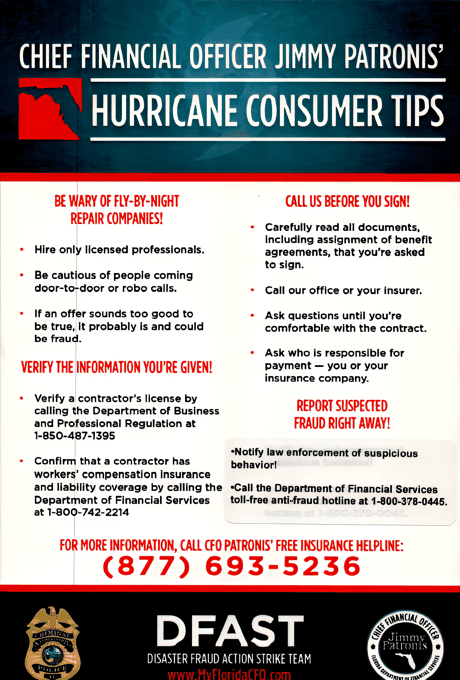
Florida law requires contractors to be licensed, especially for significant repairs following a disaster. Verify licenses with the Florida Department of Business and Professional Regulation before hiring anyone.
High-Pressure Tactics to Sign Contracts or Make Payments
Be wary of contractors or representatives who insist on immediate action or payment. In Florida, legitimate businesses understand that homeowners need time to evaluate options, even in emergencies.
Inconsistent or Vague Details About Services or Claims
Reputable service providers in Florida will provide detailed estimates and clear terms. Be cautious if someone cannot provide a written contract or avoids specific details about services.
Unusual Requests for Personal Information or Payments
Verify the identity of anyone requesting sensitive information or payment related to disaster relief. Florida’s official agencies will not ask for personal information through unsolicited calls or emails.
Steps to Protect Yourself Before a Disaster in Florida
Verify Contractors and Service Providers in Advance
Keep a list of licensed contractors and reputable service providers in Florida. The Florida Department of Business and Professional Regulation’s website is a valuable resource for verifying licenses.
Document and Secure Important Property and Insurance Information
Regularly update your home inventory and photograph your property. Store important insurance documents in a waterproof, secure location, ensuring that you have easy access in the event of an evacuation.
Know Your Rights: Understanding Florida’s Insurance Policies and Coverage
Florida’s unique landscape requires specific insurance policies, such as flood and windstorm coverage. Familiarize yourself with your policy’s details to avoid surprises during claim filing.
Establish a List of Trusted Charities for Future Donations
Research legitimate charities active in Florida, especially those with a history of hurricane relief work. This can guide your donations after a disaster, ensuring your contributions go to those truly in need.
Actions to Take If You Suspect Disaster Fraud in Florida
Reporting to Law Enforcement and Insurance Companies
Contact local law enforcement, the Florida Department of Financial Services, or the National Insurance Crime Bureau if you suspect fraudulent activity. Reporting helps authorities investigate and prevent further scams.
Contacting the Florida Department of Financial Services’ Fraud Bureau
Florida has specific resources for addressing insurance and contractor fraud. The Fraud Bureau can guide you through the reporting process and offer advice on how to protect your rights.
Utilizing Disaster Fraud Hotlines and Online Resources
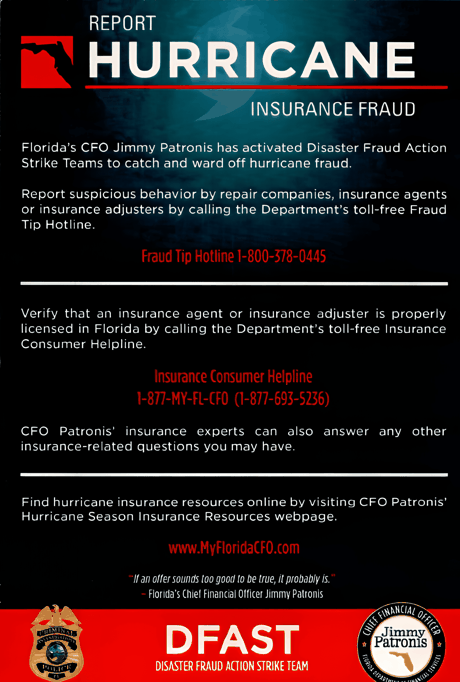
Call Florida’s Disaster Fraud Action Strike Teams' hotline to report suspicious activities. These teams are specifically designed to combat hurricane-related fraud.
Documenting and Gathering Evidence to Support Your Claims
Save all contracts, receipts, and communications related to repair or recovery work. These records can be used to substantiate your claims when reporting fraud to Florida authorities.
The Role of Florida's Government and Law Enforcement in Combating Disaster Fraud
Disaster Fraud Action Strike Teams and Their Initiatives
Florida's Disaster Fraud Action Strike Teams, initiated by the state’s Chief Financial Officer, actively monitor and investigate fraudulent claims during disaster recovery. These teams work with local authorities to prosecute offenders and protect Floridians.
Collaboration Between State, Local, and Federal Authorities
Disaster fraud prevention in Florida involves coordinated efforts from the state government, local law enforcement, and federal agencies like FEMA. This collaboration helps streamline fraud prevention and enhance investigation capabilities.
The Importance of Community Awareness and Education Campaigns in Florida
Florida’s government frequently runs public education campaigns to inform residents about recognizing and reporting disaster fraud. Increasing awareness across the state is crucial for preventing scams and aiding recovery.
Tips for Hiring Contractors After a Disaster in Florida
Verifying Licensing and Insurance Requirements in Florida
Florida contractors must hold a valid license to perform work on storm-damaged properties. Confirm their licensing status with the Florida Department of Business and Professional Regulation.
Getting Multiple Estimates and Avoiding Upfront Payments
Obtain estimates from multiple contractors to gauge the scope and cost of the work. Avoid paying large sums upfront; reputable contractors in Florida offer fair payment terms.
Understanding Contracts and the Fine Print Before Signing
Read contracts thoroughly and consult legal counsel if needed. Make sure that contracts meet Florida’s requirements, including specific disclosures for storm-related repairs.
Knowing When to Walk Away from a Suspicious Offer
If a contractor’s offer seems too good to be true or involves unconventional payment methods, consider it a warning sign. Florida homeowners should trust their instincts and opt for transparency over haste.
Insurance Fraud Awareness in Florida: What to Look For
Spotting False Claims or Inflated Repair Estimates
Watch for signs of claim inflation or unnecessary repairs. Some fraudsters may exaggerate damage to collect higher insurance payouts, a common scam in Florida after hurricanes.
Dealing with Insurance Adjusters and Ensuring Fair Claims
Be aware that not all adjusters operate fairly. In Florida, homeowners can request a second opinion on their claims if they suspect discrepancies in estimates or coverage.
The Consequences of Committing Insurance Fraud in Florida
Insurance fraud is a serious offense in Florida, with penalties including fines, imprisonment, and restitution. Ensure that all claims you file are accurate and truthful.
Avoiding Charity Scams in Florida After Hurricanes
Checking the Legitimacy of Charities Before Donating
Use Florida’s official charity verification resources, such as the Department of Agriculture and Consumer Services’ charity registry. Avoid new or unfamiliar organizations without a verifiable track record.
Donating Directly Through Verified Websites or Platforms
When supporting Florida-based charities, ensure you donate through official websites to reduce the risk of fraud. Look for verified accounts on established donation platforms.
Avoiding Cash Donations and Questionable Fundraising Efforts
Pay by credit card or check for a traceable transaction. Question any fundraising efforts that pressure you for immediate, cash-only donations.
Understanding Your Insurance Rights and Coverage Limits in Florida
Reviewing Your Policy Before and After a Disaster Strikes
Regularly review your insurance policy, especially in preparation for Florida’s hurricane season. Confirm that coverage aligns with your property’s needs and risks.
How to Dispute Denied Claims or Unfair Settlements
In Florida, insurance companies must provide a written explanation for denied claims. Use this documentation to appeal decisions or seek assistance from a public adjuster.
Knowing Your Options for Additional Coverage in Florida
Given Florida’s exposure to hurricanes and flooding, supplemental insurance may be necessary. Evaluate options such as flood insurance to ensure comprehensive coverage.
Why Disaster Fraud Spikes After Natural Disasters in Florida
The Opportunistic Nature of Scammers During Florida's Storm Season
The immediacy of recovery needs creates a window for fraudsters to exploit Florida residents who are eager to repair and rebuild.
How Fraudsters Exploit Vulnerability and Confusion
Florida’s diverse population, with varying levels of disaster preparedness, is particularly susceptible to scams. Language barriers and lack of insurance knowledge exacerbate the issue.
Trends in Fraudulent Activities After Major Hurricanes and Storms in Florida
Following high-impact storms, such as Hurricanes Irma and Michael, reports of contractor and charity scams increased significantly. These trends underline the need for vigilance during recovery.
Success Stories: How Florida Victims Overcame Disaster Fraud
Real-Life Cases of Recovery and Justice in Florida
Some Floridians have successfully taken legal action against fraudsters, recovering lost funds and securing justice. These cases provide valuable lessons in resilience and advocacy.
Lessons Learned and Advice for Others Facing Similar Situations
Practical tips from those who have experienced disaster fraud in Florida can offer guidance on avoiding pitfalls and recovering more effectively.
The Impact of Technology on Preventing Disaster Fraud in Florida
Using Apps and Online Tools to Verify Contractors and Charities in Florida
Technology can help Florida residents verify licenses, check reviews, and confirm charity legitimacy, reducing exposure to scams.
Digital Reporting Platforms for Suspected Fraud
Florida’s disaster fraud reporting systems allow for efficient reporting of suspicious activities, aiding swift investigations.
How Social Media Plays a Role in Alerting Others to Scams
Florida communities can use social media to share warnings about local scams, enhancing public awareness and enabling rapid responses.
The Importance of Community Involvement in Fraud Prevention in Florida
How Neighborhood Watch Programs Can Help Spot Scams
Floridians can leverage neighborhood watch groups to identify suspicious behavior, particularly after storms. Local involvement strengthens fraud prevention efforts.
Encouraging Local Businesses to Educate Customers About Fraud
Businesses across Florida can help educate residents on how to identify fraud, offering resources and workshops tailored to local needs.
Hosting Fraud Awareness Workshops and Events
Community events in Florida that focus on fraud prevention can empower residents with the knowledge needed to protect themselves.
Protecting Vulnerable Populations in Florida from Disaster Fraud
Special Considerations for Seniors and Low-Income Families
Florida’s senior population and economically disadvantaged communities are frequent targets of scams. Tailored outreach efforts can provide these groups with additional protection.
Tailoring Fraud Prevention Messages for Diverse Communities
Florida’s diverse population benefits from multilingual fraud prevention materials and culturally relevant education strategies.
Ensuring Access to Fraud Reporting Resources for All
Make disaster fraud reporting information accessible to Floridians, including those with disabilities or limited English proficiency.
What to Do If You've Fallen Victim to Disaster Fraud in Florida
Steps for Recovery and Rebuilding After a Scam
Report the scam to local authorities, seek legal assistance, and contact your insurance company immediately to mitigate further losses.
Accessing Financial and Legal Assistance for Fraud Victims in Florida
Numerous resources in Florida provide support for disaster fraud victims, including state-funded legal aid and financial counseling.
Emotional Support Resources for Those Affected
Scams can leave emotional scars. Florida offers counseling services and support groups specifically for those impacted by disaster fraud.
Long-Term Solutions for Reducing Disaster Fraud in Florida
Legislative Changes and Policy Recommendations
Proposals for stronger anti-fraud legislation in Florida aim to deter criminals and streamline prosecution of disaster-related fraud.
Enhancing Disaster Response Protocols to Include Fraud Prevention
Florida’s disaster plans should integrate fraud prevention strategies, training emergency responders to recognize and report fraudulent activities.
Building a Culture of Fraud Awareness and Preparedness in Florida
Educating Floridians about fraud risks and encouraging proactive measures can build resilience and reduce the impact of scams.
Conclusion: Staying Vigilant and Prepared Against Disaster Fraud in Florida
Florida’s frequent exposure to natural disasters makes disaster fraud a pressing concern. By staying informed, verifying services, and taking proactive steps, Floridians can better protect themselves and their communities. Awareness, preparation, and swift action are key to reducing the risk and impact of fraud during recovery efforts.
Call to Action: Resources and Contacts for More Information on Disaster Fraud Prevention in Florida
Contact the Florida Department of Financial Services, utilize the state's fraud hotlines, and explore online resources for the latest tips on avoiding disaster fraud. Empower yourself and your neighbors to stay fraud-free this hurricane season.

:format(webp):quality(80)/u.realgeeks.media/homesinorlando/home_light_awards/2023_certificate.png)