You’ll find our blog to be a wealth of information, covering everything from local market statistics and home values to community happenings. That’s because we care about the community and want to help you find your place in it. Please reach out if you have any questions at all. We’d love to talk with you!
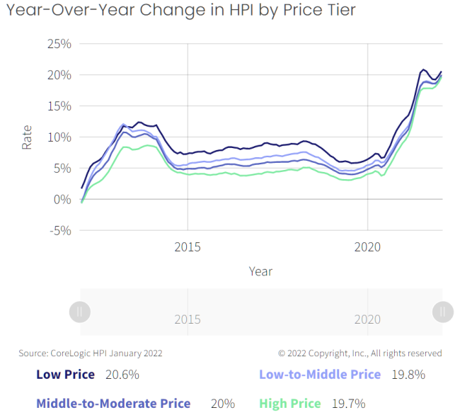
Rents Are Rising 4 Times Faster Than They Did in 2020 Imagine paying $1500/month for rent in 2021 and getting a renewal letter for $2079. While the 38.6% seen in Miami was by far the highest annual change, other metros were nonetheless well above 2020's levels. Specifically, December's year-over-year change was 12.0% compared to January's 12.6%. One notable shift over the past several months has been the ability of the "attached" home sector (condos/townhomes) to match the pace of the detached single family residence. Rent price appreciation has been broad-based as well, with both low and mid tier homes at 12% and 12.2% respectively.
Mortgage Rates Explode Higher. Anything Quoted Before Right Now is LONG Gone If you received a mortgage rate quote any time in the past few days or weeks, unless it was at the end of the business day on Monday, March 14th, you're looking at a relic of a bygone era. Print it out and hang it up in the halls of Woulda, Shoulda, Coulda. It's also not been a good time for rates between inflation, and the Federal Reserve's response. When investors sell bonds, yields/rates move higher. That began happening early today and it continued to happen throughout the trading session. In the very best cases, some lenders are only .125% higher in rate (to put that in perspective, few individual days see bigger moves). The average conventional 30 yr fixed rate is easily up and over 4.25% now, with lenders anywhere from 4.375 to 4.625% depending on the scenario.
Sunshine State Scramble: Why Is Everyone Moving to Florida? It’s not just Grandma who’s moving to Florida these days. People from all over the world are looking to buy a piece of property in the Sunshine State. In just the past year alone, Florida gained more than 200,000 residents, according to the latest census data, second only to Texas in population growth. There just aren’t enough homes for buyers. Like the rest of the country, the number of homes for sale had been shrinking in Florida for a while. And while homebuilders are trying to keep up, they’re experiencing the same supply chain issues that are plaguing the rest of the country. Florida is starting to look less affordable. The median list price in Florida last month was about $434,000—significantly higher than the $392,000 national median list price, according to the most recent Realtor.com data.
Home Prices Aren't Done Setting Records Yet CoreLogic released its Home Price Index for January today, showing year-over-year price appreciation of 19.1% nationally. That's the highest rate of appreciation since this data series began in 1976. This trend accelerated into the middle of 2021, but higher priced homes have been catching up since then. As always, appreciation varied significantly depending on the state. This commentary is notable in light of the past 2 days of developments in the mortgage market where rates have fallen at the fastest 48-hour pace since the start of the pandemic. Home price gains are projected to slow to a 3.8% annual increase by January 2023.
Zillow sells off $25M+ worth of Orlando homes to investors following iBuying business exit. Zillow Group Inc. has sold at least 441 homes in Central Florida's Lake, Orange, Osceola and Seminole counties, according to property appraiser data. One of the biggest local transactions by Zillow since it exited the iBuying business was the Feb. 10 sale of 33 Orlando homes to Progress Residential for $12.6 million, according to an Orange County deed. It’s likely that the homes offloaded by Zillow will be targets for investors in the region looking to turn homes into rentals. The local residential real estate sector slowed from December to January, but it’s still a hot seller’s market. The median sales price sank 1.4% from $340,000 in December to $335,000 in January.
Housing Sentiment Drifts Lower As Affordability Constraints Sharpen
Housing Sentiment Drifts Lower as Affordability Constraints Sharpen
The Fannie Mae Home Purchase Sentiment Index® (HPSI) decreased 2.4 points to 71.8 in January, its lowest level since May 2020. In January, a survey record-low 25% of respondents reported that it’s a good time to buy a home, compared to the 69% of consumers who reported that it’s a good time to sell. Good/Bad Time to Sell: The percentage of respondents who say it is a good time to sell a home decreased from 76% to 69%. Mortgage Rate Expectations: The percentage of respondents who say mortgage rates will go down in the next 12 months remained unchanged at 4%, while the percentage who expect mortgage rates to go up increased from 56% to 58%.
The Consumer Price Index for All Urban Consumers (CPI-U) increased 0.6 percent in January on a seasonally adjusted basis, the U.S. Bureau of Labor Statistics reported today. The all items index rose 7.5 percent for the 12 months ending January, the largest 12-month increase since the period ending February 1982. The energy index rose 27.0 percent over the last year, and the food index increased 7.0 percent.
Good morning. My name is Brenden Rendo and I'm with The Homes in Orlando Team at NextHome Neighborhood Realty. And again this is my associate, Jospeh Dionne of Appli Home Loans Hey and this Good morning and welcome to the Orlando Real Estate Buzz
We are a weekly show that tries to bring information about the local real estate market and things that are going out that are affecting it today kind of came up rather quick because I'm working with some different investors and we're trying to find some lending solutions that were different than the conventional market. and so I turned to Joe and said Joe, this is what I've got. do you have anything out there that can help us?
And he's able, he was able to bring me a new, a new program and you're saying these programs are starting to become more relevant for the, for the investors Yeah so these programs have kind of been out for a little while and they were really prevalent or kind of say really prevalent You saw them a lot more in the early 2000's and then they kind of went completely away. But we're seeing a lot of investors.
A lot of lenders so our program is, you know, the investor gateway. but it's basically all it is is it's a debt service coverage ratio loan or a DSCR our loan. So you hear those terms and I and I've been getting a lot of questions, a lot of people and a lot of investors asking, what is this? DSCR What is it? How do how do I qualify? You know, is it easier for me? Does it make sense? Is it hard money? And I think today we're just gonna take a little bit of time to just dive in and and talk about what this program is and why it's a benefit and who it's a benefit for. Makes makes a lot of sense because investors are always looking for alternatives. And a lot of these investors, you know, go back and they're they're they're self employed.
Or it's it's a second type of job position. So we just can't go and do the conventional. Hey give me two years tax returns. Give me the bank statements, you know, show me all this stuff and a lot of them are trying to turn something really quick. So so you've got to find an alternative. You've got to be ready for them when they do find especially these days, you know, a few properties that are available. So why don't we dive in? Yeah. And let's go through a little bit about the program. my goodness. You put together a PowerPoint. Yes I did.
You know, he doesn't he's like Joe we're gonna talk about this. He's prepared. Let's go, you call it debt service coverage ratio, I call it cash flow and that's the way I look at it. What's the cash flow of the property? Right. So let's hop in and let's go through who these are, who these loans are really targeted.
Yeah. So these are, these are investor, These are investor focused loans. Therefore investors, they're not like you're not doing this loan on a primary property because you know, like you said, it's a cash flow. Like if you're living in the property, you're not cash flowing that property, they're geared for investors. So they're really geared in a couple of different scents. People that have significant portfolios. Why is that important? Because Fannie Mae Freddie Mac, they have caps on how many loans you can finance or have finances anytime. This isn't a Fannie back loan. This is a Freddie Mac back loan. This is an actual private portfolio type loan that investors are offering. So it's, it's excluded from those caps. So you can go above that. What is it? 5, 5 property? So you simply see usually, you know, Fannie Freddie go to ted depending on it. But usually you see that it's most investors, they kind of reduce it to six or eight is what you see like big banks kind of lock people in and out on for traditional loves. You don't want too much exposure.
It's all about exposure. Exactly. And then you have, you know, traditional, you mentioned here bars that don't qualify for traditional or full income documentation. And, and this is like this is where like the bread and butter is, is like these programs are, Its qualifying on the property. So it's not looking at a lot of the other pieces like you know, there's things that you know, and then you mentioned with excessive amounts of debt obligations. Again, if it's not looking if it's only looking at the property, right? It's not it doesn't care about what their income is, what their what their debt debt to income ratio is. It doesn't care about their obligations outside of what is this property going to do. Okay, so let's go hop over to the next one and let's talk about how does it? Yeah. So I mean it's super it's super easy and to qualify and it's a very basic, you know, program when it comes down to the science and the nuts and bolts, right?
It's what is it what is it renting for? As long as that is, you know, divided by or excuse me, the principal interest, taxes, insurance. So the total monthly obligation divided by the amount it would rent for? Okay, that number is greater than one. It qualifies. And here's kind of the here's kind of the trick if it's less than one, sometimes it still qualifies. Okay, what are you looking more at the asset strength of the borrower?
Yeah. So what it does there because again remember like you have your Fannie Mae and Freddie Mac, those traditional like your traditional conventional finance properties, right? And it's all it's all rules. It's it has to fit within this box we have, you know this, this huge manual, the seller guide. And if it doesn't fit within those rules, it doesn't qualify well with these programs, its portfolio, meaning the bank is the one funding it like they're they're they're holding it there. It's almost like it's almost like a private money. Exactly. And around about kind of like private money, which means what that there's exceptions granted. Oftentimes, so maybe the DSCR are might be lower than one. And they look and they say, you know what, this bar has got bigger assets. We're going to take on this risk. Here's what we're gonna do and we'll counter our proposal or get a little bit creative because We're not just looking at a 30-year fixed options, we've also got interest only options. Potentially I could get that payment and again, it's okay. But when you say they make counter, what you're saying is sometimes maybe you went in at 20% down. Yeah. But they may come back and say, well, we're a little bit under the one. If you're able to do 25% down, we can make, we can make this loan happen something like that.
Okay. Which is nice because these days, you know, when you're in a conventional loan, it's like it's approved. No, it's not. It's approved. No, it's not, there's, there's there's no going back to the to the underwriter negotiating anything. It's no, you're captain, you're not approved. That's it. Bye. So let's let's go through a scenario with about debt service coverage ratio. Because one of the things today which is great for investors is rent have just shot through the roof. And also that when you're looking at your what we call debt service coverage ratio, You know where you know you may have been right in the property at $1,200 You know two years ago you're probably getting 2000 for that thing. Yeah that's craziness. I don't know how people afford. Yeah that's right. That's for another conversation. Yeah so so I think what do you and you mentioned you've got red schedule an appraisal. So you're saying 2000 what do you what do you think this is? Like what a 300,000 price point I think is what we should be right in that ballpark Bottom 300 probably.
You know I would assume 20% because I know a lot of investors you know that 20% mark is is it's something that a lot of them will feel comfortable with as well. So that's how that's that's what, yeah so I and we have like you know it's very simple as long as it's greater than the P. I. T. A. I say a dollar more. And I think that's you know like a dollar more is just easy if the P. I. T. I. A. Is $1999 and it comes in a $2000 qualifies. I mean realistically it's it's it's the ratio itself has to be Over one. Which means that it could be, You know the proposed rent could be $1999.1. And if the monthly obligations 1999 and no sense it's over one it qualifies because as an investor, we used to look at it and we tried to keep it at 1.2.
Okay? But with the increase in costs, if you're getting one person, you know the one ratio, you're you're actually feel like you're doing good these days. You know, as as an investor if you can keep it above the one and you're not having to, you know, come out a little bit every month. You're actually these days you're doing good just because of the increased cost of caring and we have the increased cost. But really what makes it beneficial for the investor right now? Is that increasing appreciation right now your property if you're breaking, you know, quote unquote of the month and month. Like if it's breaking even so to speak. But you're just holding that property. I mean year over year. Like the Metro Orlando was what the average home I think last year. Yeah that's you know that's craziness, yep. So you know, taking that example right? And we sit there and say all right 300,000 purchase price to 20% down. So 240,000 loan amount. You know, we won't go into details, you know, I think we estimated this rate was, you know, 6%. This isn't a qualification for, you know, an actual mortgage or anything. This is just an example. So principal and interest 14 38 92 taxes 31 to 50.
That's an estimate based off the norms that gets you a total payment of 18 76 42. And this is kind of like your average $300,000 property. This is what you would be looking at with 20% down. And you're telling me that typically in that price range we're going in 2000. Yeah, yep. And we're for the, for people to understand where we're getting that right numbers, what happens is and the phrase we'll go out and he'll do what's called a rent schedule. So he's gonna actually go around at home just like you would in the normal appraisal process and he's going to figure out what rents are going for and that's that's what what what we're looking at and that's where we were to get that that 2000 Yeah, yeah, and that's, you know, on a on a purchase transaction. Exactly. Just like appraiser goes out and gives you that value. The appraiser does the rent schedule as well, which they look at the recent comparable for properties that are rented and determines what this property the subject property would yield and rent, yep. So again, just got to keep it above that one ratio. And here you see, we've actually got a little room so that maybe the insurance comes in at 150 or one, you know, we're still good. You still got room. Excellent.
Let's just kind of sum it up, everybody let them know, you know, what are some of the features and you know, what are some of the things that you can do with it as far as like, I know a lot of, a lot of investors may want to take some cash out. Things like that, yep. Yeah, so I definitely think this is kind of getting a little bit more geared towards some of like kind of what our program features and, you know, but a lot of, you know, a lot of investors have similar features or, you know, banks might have similar features or so forth. But some of the biggest pieces, you know, is, you know, obviously these are 30 year fixed, but there's an interest only option as well, which is very attractive because that sometimes that increases that margin. if you're holding onto a property and so forth and you expect to hold it for 5678 years, you know, the interest only might make sense for you. especially with the appreciation. That's exactly, and then, like What's kind of cool. Here is we can do 15% on this program, which is really, really hard, like you've always been able to do 15% with Fannie and Freddie, but like a lot of banks don't allow it. And Fannie and Freddie are extremely picky with that 15% down this program, they'll do it and I actually, like sometimes the 15% down may actually be Better and pricing than 20 or 25% down, it just depends on the investor in that given day because it changes constantly. and it's all about buckets, it's all about exposure. So if they have the bucket with 15 and 20 and 30, You percent down and they've got nobody pricing up and putting anything in that 15% bucket, they're going to try to make it more attractive and put something there. So that's a really, really cool one. And what happens with this, like the whole point of a DSCR are right, is simple, reduces the underwriting reduces all the kind of pieces that you need to do. But it also keeps more cash in hand for the investor, which means they might be able to do if you can do a 15% down or a 20%, you might be able to buy four or five properties with the same money, you would have plopped down on a, On one property if you paid cash.
Yeah, I know because a lot of, a lot of what we would call hard equity, hard or hard money loans. A lot of those. I've got a friend who does all that and they're still sitting at 30 down. So you know, doing the 20 or even the really 15 unheard of. Again, you're right, I've just taken that and divided into two houses instead of just one house, yep. Exactly. So, and then, you know, you mentioned the cash out refinance, like, you know, some investors already own the properties that they own a lot. This is a big one and you can do as much as three million. I mean, I haven't seen it go that high, but I have investors that are on the back and willing to go up to three million on a cash out on this program, which is, which is crazy and it's awesome. and it just adds a lot of funds. The next piece that you listed here, we can close in an LLC almost every every investor that does this program because again, this is a this is a non Qm. This is a portfolio type product. They're gonna allow to close in an LLC a corporation, a trust. And and again, the credit, like they're looking at your they, you know, they're reviewing your personal credit, the mortgage is going to be tied to your personal credit, but you're able to close and to those LLCS and corporations, which is great because protection for the investor. That's, that's why that's exactly why you set him up This protection so that if something happens, they don't come after you personally. Exactly. credit scores as low as 600. Again, portfolio private loans, you know, you're not gonna probably, you're not gonna get a 15% down option if you're at 600 credit score, you know, you're gonna have like, but we're able to look at scenarios and credit isn't the determining factor.
It's not just hard, you know, hard. No, If you're 6 56 60 I've got a lot of hard money or portfolio investor programs that that before this, that they were like, hey, we don't want, we want 30 to 40% down. If this person has a credit score under a 6 60. Like this is not going to penalize you to a great extent for that. And it's, it's all about being able to evaluate and work with someone that's able to really talk to that bank and really figure out what options are available and where can we evaluate this now? Probably going to have a higher interest rate if you've got a lower credit score, those things kind of just work that way, lower credit score interest rate is almost always going to be higher. Yeah. So single family residence condo, 2 to 4 units are allowed. Why is that important for you? Like this kind of opens the gamut for you guys. It does well, especially here in the Orlando area because there are so many, so many condos that investors own, you know, and a lot of programs that I've seen, don't do condos and congress are still, I mean my gosh, if you can find a condo in that 152 $100,000 price range, you're getting $1800 a month on a two bedroom, two bath condo. I just had a conversation with a young lady who, she's in a 11 over here in stable and she's paying $1800 a month. She's like, can you help me, you think we can save some money if I buy a house and like, yeah, yeah, I'm like, my gosh, that's not so to kind of compound it. this is the big one we touched on it before, unlimited amount of properties owned. The reason why this kind of works is because they're not looking at what's finance before and they're only looking at that property. Now, every investor has exposure limitations. But whereas Fannie has general rules that's going to apply to all loans that's insured by them. This program is not, you're gonna only care like I've got investors and I've got multiple back end investors and lenders that are sitting there saying, hey, like I can do this program, I can do this program and I can sit there and be like, if one has exposure with five, I can bring five to them and then I can go to the next one and bring five more to the next person and we can build, you know, a portfolio can be built. That's pretty significant through this program. Gotcha.
Yeah. So, I mean, I think that's really, really a super important to first time investors are allowed. This is a big one. Like a lot of these portfolio loans, like how many people are trying to break into being an investor and then they're like, they've got the, like, they've done an amazing job. They've saved up, but they still work there. W two job. Their, you know, their, their expenses aren't, their, their, their debt to income ratios aren't in line to make sense to, to do it, but they've got a large, large amount of assets and they want to break into this mold. A lot of portfolio products that are investor geared don't allow first time. No, they don't. This goes back again to my friend here in town who does, who does the private equity, hard money type loans. They actually want you to put together a schedule of the projects that you've done and you actually have to show them that you've done something, you haven't boom, you're out, you're out there won't even touch you. It's like, and again, it goes back to how, how do I get started that, you know, where do I find my money? You know, this is, this is great. You know? Yeah. So I mean, I think this is really, really awesome and this isn't an all inclusive. These are some of the benefits. Like if you, if you really like if someone is ready to take or they're curious to find out more information, definitely connect with myself or reach out if you've got someone that, you know, and you're working with, ask them about these programs, find out the information and, and, and look at your scenario and find out is this program right for you or not. I will tell you like, you know, in the grand scheme, these are, you know, their, their portfolio, They're super easy. Like we can order appraisal before disclosures are signed. We can like really with these loans, you know, you may, you know, some investors might not even require disclosures be assigned because it's basically portfolio private money in a roundabout way. And, and it really just opens up timeline. It's get titled get appraisal back. They're gonna look at your credit report because you know, a lot of investors probably, you know, if you're late on your current mortgage, you're probably throwing, you're, you're, you're not going to be setting, you know, setting an example that you're going to do well on this one, but they're very basic guidelines and I can talk to anybody that's interested to learn more information. I can tell them about my program, but again, just know these terms when you're ready to invest or if you're working with someone else, you know, and you, you, you're curious about these type of programs.
Note DSCR our debt service coverage ratio, ask these questions because it can open up the door and a lot of people don't know that these programs exist so they don't even ask about them. Yeah. And I mean even even if you're paying a 6% interest for it. my gosh, when I used to write hard money were 18% in three points and we got it without question. Mm You know, I mean if you're at 6% and your cash flow go for it, you know, that, that for an investor that's the bottom line and my cash and my cash flow positive, that's what you want to see a lot of what, you know. Exactly. And that's and that's a big key. And if you look at the market right now, Fannie and Freddie, like if it's a, if it's at 6% like, and this is like I priced up some scenarios where it's been somewhere in that range, you know, like even a little bit lower, a little bit higher when you have those types of scenarios like it's really not. It's, and it's a really attractive option if you've got no other way to go. It's absolutely phenomenal. But sometimes, you know, and I've had investors that have come to me and they owned 14 properties that they have, they just don't want to deal with the paperwork. That one, you know that 1 to 2% more than what Fannie Mae rate might be, is that hassle isn't worth that time. Yeah, I understand completely.
Well, I appreciate it and I appreciate you telling about this for my investors. I know we've got at least one or two that we're gonna, we're looking at right now and any questions again, feel free to reach out to me, feel free to reach out to joe except he'll be on the beach in Miami. but I know he keeps his phone handy, so. Alright, wonderful. Have a great time and we'll see you again next week, joe. Bye bye. Thanks so much. Guys have a great one.
Orlando Housing Market Added $52 Billion In Value in 2021
Orlando housing market added $52B in value in 2021.
Here’s why it will keep growing. Metro Orlando's housing market is worth $283 billion after a $52 billion value bump last year Rapid price increases and a flurry of new home construction across the region in 2021 contributed to this jump in the local residential real estate market’s value. Meanwhile, housing professions expect building and price appreciation to grow this year in metro Orlando, further ballooning the value of the local housing market. That’s mostly due to rock-bottom levels of home inventory that will keep the market competitive. Metro Orlando home prices are forecasted to rise 5.4% this year, according to Realtor.com. Orlando ranks the 27th most valuable housing market among the 50 biggest U.S. metros, putting the region in the middle of the pack.
How Are Solar Panels Considered in The Value Of A Home
How Solar Panels Affect A Homes Value Good morning, my name is Brenden Rendo with The Homes In Orlando Team at NextHome Neighborhood Realty and this is my associate ,buddy, Joseph Dionne of Appi Home Loans

Welcome, Brenden, What's up? Ready for a new one this morning, this is gonna be interesting one, so we are. I had to do that one, I worked on it all week, how to come out, okay, okay, all right, I like it alright, stepping it up. So this is the Orlando Real Estate Buzz what we do is we try and we come to you on a weekly basis to discuss some of the issues out there with the real estate market. the one that comes up today is solar plants and the reason why I picked this one is always at a appraisal meeting and it just was doing a conversation with the appraiser and I had asked him because it's come up for me several times, especially recently showing a client down in Davenport there were several houses with solar panels on and I needed to know how do I count those in the value of a house.

Yeah, and he goes, now it's easy, I'm like it is because yeah, in December, Fannie Mae came out with guidelines for solar panels and you know it's it's the first time they've actually kind of put something together and it was kind of interesting because it puts a lot of responsibility on you, Joseph now and let's go, we can take a look at that real quick, let me share, it's gonna pop up. But yeah, there it is. Okay, so this is a guideline that they've put out as of December 15 of this year.

Okay and basically what is stating is now you see down here lenders are responsible for determining the ownership and any financing structure of the subject properties, solar panels in order to properly underwrite the loan and maintain first lien position. Yeah that's I think that's the biggest key and this is like Fannie Mae put into writing because it became a bit bigger piece but a lot of investors and a lot of lenders had already kind of taken very similar steps but the reality of this is it does fall on the lender and this is the hard part is this is this is crucial because what what what what you heard was it's easy, well now it's the lender's responsibility but but you know like typically the lender doesn't find out until what somebody tells us that there solar if we want a smooth transaction you want to create a good environment that's going to actually create a, you know to make sure everything seamless, we really need to know going into it that hey there's solar panels and why why is that? It's because of debt to income, yep, yep and they've also put out some guidelines now that hey if it's financed and collateralized that you have to calculate it in the debt ratio right here include the debt obligation in the D. T. I. Calculation.

Yeah and and that's you know just you know what we talked about is that debt to income ratio, you know I'd love to sit there and say like how many how many clients are you like Hey like when I can buy a house for 300,000 is the most buying power that I have. How many are coming back saying you know what, I'm probably gonna buy a house for 200 because you know they're not. Yeah because now also and I've got I've got solar panels on it and I've got a $250 a month payment. Some of the prices on these solar panels are amazing. I've got a sample contract in here because I was looking at a house for a client down in Davenport's mutual client of ours and she liked the house but I had Copy of the of the Lease Agreement, $50,000 cost to install The Solar System Total Payout 71,000. After the 1st 12 months the payment went up to $252. And you know so all of a sudden it's like that's a car payment that's more yeah you know a low car payment but it's a car payment and again we run into the same issues we've been running into with a lot of people is all of a sudden the debt to income just goes away.

Yeah and you know the complexity of this as well is what a lot of people don't realize like we hit the term. So let's say on the lender's side and finance excited as we see that there is a, a, you know, there's a solar system, solar panel system on the house and then we find out that the seller owns it, but they financed it right and they're not going to pay it off or they're leasing it and its finance. So what ends up happening is now it goes to, it becomes the like, hey, if the buyer wants to close on the house, they now have to incure this, this monthly obligation. So that impacts debt to income ratio. But the other piece that a lot of people don't think about is that client now has to apply with that solar panel company that has the financing or has the installment loan and get approved with them. And for us to close on our side, we've got to see that they are approved and then they have the terms in place. So effectively, you know, they're not going to, you know, make a payment or anything before they close. But effectively that buyer is saying, hey, I'm, I'm agreeing to terms for this loan that I don't for a solar panel that on a house that I don't even own yet, I don't even own yet. And what do we always tell our clients not to do, what's the number one rule you tell all your clients not to do add more debt, more debt. Make apply for any type of credit whatsoever. You know, that's we drill it, you know, don't go go to Kanes and buy furniture the day before because they're gonna pull us, they're gonna pull enough soft credit. Make sure that you haven't done anything stupid before before the closing and now we've got to do now. Probably have to go to the underwriter and write a letter of explanation.

Well I, I applied for the solar system because solar systems on the house and I have to, you know, if I buy the house, I have to buy the solar system. Well most underwriters are gonna require, if we go into it, they're going to require, we're gonna need to see the new lease agreement, the climate plan, we're going to see all that. So there's not going to necessarily be anything kind of that added work is going to be on them, but it is added work and it takes time with one of the, with a past client of mine recently that we had, we went into it, we found out that the client had solar panels and thank goodness we did this at the start because I told the bar, I was like, hey you have to, you have to make this application now. And he's like, well we haven't even done the inspections. I said, we don't know how quickly they're going to move. I was, I was my only condition.

I told him the day I got the contract. My only condition 3.5 weeks later on the file was the documentation for this new loan. And he was waiting for a response that the company that had the financing would sign over the, the loan to him and it eventually happened. But we were all the way up down to the very last minute to be within the contract terms. And the irony of it was, this was one of those you know, big bank corporations night that was probably the property we won't go into names. And they were like, hey, if you need more time, that's not our fault. Like you're gonna, you're gonna start paying per diem if you need more time. And that's what I was, I was laughing. I was like, imagine if he had if he had waited a week to do that application, he would have already, he would have had a delay and it would have cost them money and per diems that this seller was charging this corporate seller was charging for the house he was buying and he couldn't have avoided it.

Well, it's, it's an interesting, let me see if, yeah, here's the wanted to bring up. You mentioned that the lease part of the lease agreements. What's something that again, we're taught as real estate agents as and as mortgage lenders about personal property homes. If it is personal property and not considered attached to the home, it has no value. This is a this is an actual lease agreement that I got for the for our client to see exactly what the terms were of of that solar panel. And right here it states the solar panels are personal property. You and we both expressly intend that no portion of the collateralized goods will constitute a fixture attached to any real property and that the collateral collateralized goods will be removable personal property. You've just wiped out any chance of having associated with solar panels because again, an appraiser is gonna look at it that says right here, it's personal property.

If it's personal property, I'm giving no value, I'm giving no value. And when we go back to our guidelines, that's really the nut of the whole thing was that if it's leased financed or they've done what they call a power purchase agreement which is something I learned that's new. the appraiser cannot give any value to the solar panel. The only time you can do it is when it's owned and when it's and fully owned, fully owned, fully owned, exactly no kind no other kind of lien attached to it. And then you know the appraisal was talking because then it's easy because I've got two houses that are exactly the same one sold for $200k sold for $210,000 guess what, I can give $10,000 value to the to the solar system goes, but otherwise now I can, I can give what and it's an important word its consideration. He's not allowed to give consideration because there's a value in the solar system. Yeah, and a lot of people see the value in the solar system, but as an appraiser, he cannot consider it in the value of the home.

And that's a that's that's that's that's a very powerful word. And that's that that's that's something that a lot of people and a lot of agents and a lot of professional, a lot of buyers and sellers have to understand is that, is that depending on the property? Because yeah, like I think people look at and they go, well that system cost $50,000 and you know, maybe it's not worth $50,000 but they go, well maybe it's worth 30 like, you know, but kind of like putting in a pool, hey, I just spent, you know, I met with someone who's looking to list and they're like, well we have a contract for $90,000 pool, I want, it fell over costs, but to, they're like, what kind of value you think we'll get to that? And I said quite honestly, $20, $30,000 dollars you know, end of the day, You know, because you're just like a house, you know, when you, when you over build a house, you know for neighborhood, $90,000 house or $90,000 pool, this neighborhood is overbearing.

You know, so I think that's, I think that's our important thing that we've got to pull away today. Well let me hit one other thing because this is, this is I had my wife, me and I sat through, I think two or three solar panel presentations, a couple of keys that I took away from that, that in fact one, they always tell you it won't show up in your credit report okay. Because they don't, they don't report it. Things only show up in your report of the company and the company does it okay. And always you want to have fun. I always ask them what happens if I move, they never have an answer for it. And now we know why now we know why? Because they're not considering it, you know, many of them in their lease agreements are considering it personal property. Yeah.

So by considering personal property, they're basically saying like, hey, like this is your problem to rectafy I, no matter what, you know, and then basically kind of when you read through it says, hey, you know, yeah, we can take them. Yeah. And the, you see and they, but they don't tell you, they file a UCC filing either. They don't tell you that because the UCC filing allows him to go back and file a lien against the property. So you've got to have all your ducks in a row if you if you own a home with solar panels and you are thinking of selling, this is another task for you. You've got to get all your stuff pulled, you know, it's not showing up on your credit report, make sure you've got to give your lease okay.

Finding UCC filings is not the easiest thing in the world either. It's kind of a pain in the butt. Well just like one quick cap that I want to talk about as well as you know we were in central Florida so we're in Florida and Florida had, you know there was a number of different programs, someone that stands out to mine is like a PACE, the property assessed clean energy program. It was actually a incentivized program in Florida that did it. But that's actually one of the few that there's certain loan times for instance F. H A. If there is a PACE like program was used to get solar panels on your home, you can't get F. H. A financing. And the reason being is there's a number of different things but one of the things that kind of stuck out to me is the Pace loans don't allow subordination. Gotcha. And that was the big thing with the Fannie Mae guidelines is that Fannie Mae has to be in first position. Yeah, no no lender is going to take second like nobody's gonna lend hundreds like to securitize against the property and be 80 90 100 you know, 95% of that value and sit there and say, you know, we'll take second consideration, yep. So there's a lot more, you know, in summary, there's a lot more to the solar panels than just, hey, yeah, throw them up there. Yeah. You know, I was paying $200 a month, you know, electric bill. Now, I'm paying $200 a month for my, for my solar panels and after 20 years of payments, I won't have to make any more. Let's see how long those last, let's see how long those last. And it's interesting to see how many people put them on two years ago, three years ago and now selling their house, you know, so it's, it's, it's something, you know, it's, it's going to be added in. This is where, you know, having good communication between your realtor and your lender because they're gonna, you know, we're gonna have to dig together to go find this information. Yeah.

And I think you mentioned too, like I, and like you were out in Davenport area, I'm noticing on my end that there's a lot of new build communities that they're now utilizing this as like a strategy to be like, hey, not only building our house with us, but we've partnered with this solar company and they'll put it on and you can finance it all. Like we've got all this, like this is all now starting to become a bigger part of the puzzle piece of, you know, what are those loans, are they creating a second loan is actually just part of the purchase. So those details are going to pop up more and more because builders are using it as incentives to get people to buy in their communities now. Sure. So another fun thing, you know, for us to us to deal with in, in the real estate industry. if anyone has any questions on it, always feel free to give joe a call or I call or reach out to us. again, just remember that these days if according to Fannie Mae guidelines, if any, if the, if the solar panels are not owned outright and there is no type and they're not attached to any type of lien. That is the only way an appraiser can give value if they are lease and you've got to transfer the lease, it's going to count against the buyers DTI and can cause the, the deal to go south because all of a sudden you're there outside the D. T. I guidelines. Anything else, joe I think that's it. Thanks so much for having me on the, on the little chat today, enjoyed it, enjoyed it. That was, that was a good one. That was an interesting one. You take care, have a wonderful day. Bye bye next week